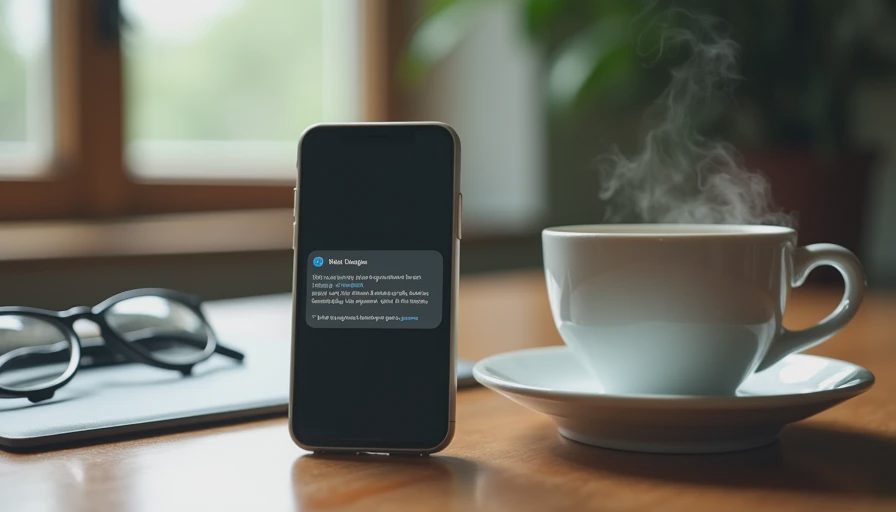
The text message looked ordinary. It came from a number that matched the format my bank uses. It referenced a recent login and offered a phone number to call if I did not recognize the activity. I almost dialed.
What stopped me was not a suspicious link. There was no link. What stopped me was the timing. I had not logged into that bank account in more than a week, and the message arrived within minutes of a different, unrelated account alert. The context did not add up.
Most scam advice focuses on the final tell—the strange URL, the urgent demand for gift cards, the request for a verification code. Those are real. But the first move is usually quieter. It is the construction of a situation that makes the later request feel reasonable.
How Context Does the Heavy Lifting

A well-built scam does not begin with “click here.” It begins by placing you inside a story that already feels familiar:
An account you actually have
A service you recently used
A problem that sounds plausible (a login you do not remember, a delivery that seems delayed, a refund that needs confirming)
Once you accept the premise, the next step—calling a number, opening an attachment, approving a prompt—feels like solving the problem rather than creating one.
The three context signals that matter most
Timing that is too convenient. A message that arrives immediately after another alert, or at an hour when you are likely to be distracted, deserves extra scrutiny.
Details that are almost right. Correct company name, correct last four digits, slightly off phone number or email domain.
A problem that only the scammer can solve. The message creates urgency and then offers itself as the only path to resolution.
When two or more of these appear together, slow down before you act.
Minimum Effort: The Thirty-Second Context Check
You do not need a technical background. You need a short pause and three questions:
Did I initiate this interaction, or did it arrive unsolicited?
Does the timing make sense with something I actually did recently?
Can I verify the claim through a channel I already trust (the official app, a phone number from the back of my card, a bookmark I saved myself)?
If the answer to the third question is yes, use that trusted channel and ignore the contact information in the message. That single habit stops the majority of context-driven scams before they reach the link or the phone call.
What this looks like in practice
Bank text arrives → open the bank’s official app and check for alerts there.
Package-delivery message → go directly to the carrier’s site or app using a bookmark or search you type yourself.
Account-security notice → navigate to the service from your own password manager or saved login, not from the message.
The message may be accurate. It may be partial. The safe response is the same: verify independently.
If You Want to Go Further
Once the thirty-second check becomes automatic, three additional practices reduce the remaining risk:
Keep a short written list (or a note in your password manager) of the official support channels for your bank, primary email, and main shopping accounts. When a message arrives, compare it against the list.
Treat any unsolicited request for a verification code, remote-access session, or payment as a hard stop. Legitimate services almost never ask for these through an inbound call or text.
After any close call, spend two minutes reviewing the recent login and device lists on the affected accounts. Context scams sometimes arrive after a real but minor event; confirming nothing else has changed closes the loop.
These steps take little time and do not require new software.
A note on “but it had my information”
Scammers routinely use data from previous breaches—names, email addresses, partial account numbers, recent purchase histories. The presence of accurate personal details does not prove the message is legitimate. It only proves that the information was available somewhere. Independent verification still applies.
What I Do Differently Now
I no longer treat the first message as the start of the conversation. I treat it as a claim that needs checking through a channel I control. The extra thirty seconds have become automatic. They have also removed the low-level tension that used to accompany every unexpected bank text or delivery notice.
The link, when it appears, is only the final step. The context is what makes people reach for it.

The Next Thing
The next time an unexpected account or delivery message arrives, do not reply, call, or click. Open the official app or site the way you normally would and look for the same information there. That one independent check is the highest-leverage move available.
You don’t have to do everything. Just do the next thing.


No notes yet — be the first to inscribe one.